Peptide Screening Laboratories: Your Total Overview To Third-party Confirmation, Purity Testing, And Quality Control
Peptide Purity Screening: Just How Scientists Confirm Top Quality The most strict grade, entailing careful HPLC filtration-- in some cases several rounds-- and extensive QC. Needed for quantitative studies, structural biology, in vivo research models, and any kind of application where also percentages of pollutant might affect outcomes. This is the grade where the boost most greatly, because achieving that last 1-- 3% of purity needs throwing out a significant fraction of the manufactured product. A practical assay gauging downstream signaling-- or a structural research utilizing NMR or X-ray crystallography-- requires the highest purity readily available. Crystallographers in particular usually require ≥ 98% pureness due to the fact that even minor pollutants can prevent crystal development or introduce disorder right into the crystal latticework. The reproducibility crisis in biomedical research study is well-documented. Along with HPLC and MS, specialized laboratories may use orthogonal techniques for included accuracy. For example, capillary electrophoresis can be utilized to divide very hydrophilic peptides or to ascertain outcomes, and MALDI-TOF mass spectrometry can aid in mapping larger or modified peptides. Many peptide producers or vendors will certainly give a COA (Certificate of Evaluation), for example our bpc 157 tb 500 blend, that consists of the purity portion by HPLC and identification verification by MS for each and every batch.
- We utilize High Performance Fluid Chromatography to make certain that the active material concentration is ≥ 99% which there are no international pollutants.
- By insisting on peptides that include verification of pureness and identity, researchers can greatly minimize the risk of experimental artefacts.
- Peptide Examination is a US-based lab offering HPLC and UV evaluation for peptide confirmation.
- Knowledge of pureness degrees will certainly also direct you if you ever require a greater pureness peptide for an especially sensitive assay.
- A lack of chromatogram does not invalidate the outcomes, rather it is a feature of just how they present results to clients.
Net Peptide Material-- The "Missing Mass"
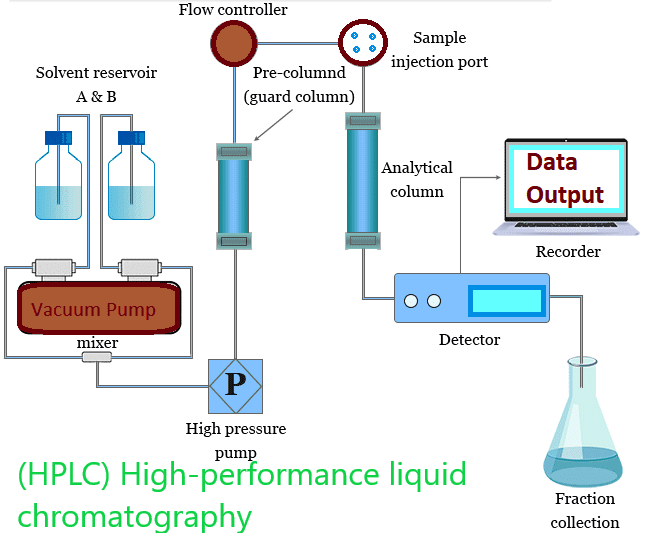
Honest Peptide is not a compounding drug store or chemical compounding facility as specified under section 503A of the Federal Food, Medication, and Cosmetic Act, neither an outsourcing center as defined under area 503B. A peptide missing one amino acid may show up 99% pure on HPLC, however would be 0% the preferred peptide. Endotoxin screening (LAL assay) is a distinctive examination from HPLC and mass specification-- it calls for different reagents and methods. Some distributors do not include it since the LAL test adds price and they view it as much less relevant for research study chemicals than for injectable pharmaceuticals. RUO COAs do not consist of endotoxin or sterility screening, although these are sometimes added on by RUO suppliers. This is mostly safe as most deposit (TFA, residual moisture) is benign. Nevertheless, there is unsafe non-peptide content, which must be evaluated for. The mobile stage, commonly a combination of water, acetonitrile, and an acid modifier, is kept in reservoirs and provided with the system by a high-pressure pump. It separates the target peptide from peptide-related pollutants (removal sequences, truncated pieces, and synthesis byproducts). Retention time is the elapsed time from shot to the moment a substance's height optimum is discovered. It is particular of a substance under details chromatographic problems (very same column, very same gradient, same temperature level). Regular retention time throughout batches offers confidence that the same compound is being supplied. If a supplier's lot-to-lot COAs reveal meaningfully various retention times for the same substance, this recommends either an adjustment in compound or a modification in chromatographic conditions-- both of which should have analysis. This is why peptides are commonly offered at different pureness grades. Closely associated with truncations, deletion more info peptides are unabridged chains that are missing out on one amino acid someplace in the middle. If capping isn't completely efficient, an uncoupled chain can remain to lengthen in subsequent steps, creating a peptide that's only Additional info one residue except the target. These can be particularly problematic since their chromatographic habits is very similar to the target peptide, making them more challenging to separate during filtration.What equipment is used to test peptide pureness?
Peptide purity is regularly established by HPLC (high efficiency fluid chromatography). This technique makes it possible for separation and family member metrology of each peptide manufactured. If coupled to a mass spectrometer (MS), this supplies molecular mass/ identification info of the target peptide and accompanying impurities.
The Need For Boosted Understanding Of Logical Ultracentrifugation Curve Installation
The why labs select Palmetto Peptides article goes over high quality standards in more information. These independent centers give the analytical confirmation that divides reputable items from counterfeits, exact concentrations from thinned down substances, and pure peptides from contaminated ones. Recognizing exactly how these laboratories work, what tests they do, and when to use them changes you from an enthusiastic customer into an educated researcher. At Vanguard Lab, our peptide pureness screening takes advantage of innovative logical approaches to assure the highest possible standards of accuracy and dependability. From example preparation to final reporting, we make sure every peptide satisfies extensive quality criteria, encouraging your research and restorative advancements with confidence. HPLC is excellent at responding to the question "exactly how pure is this sample by chromatographic area percent?Tasting & Screening
Knowledge of purity degrees will certainly additionally lead you if you ever before require a higher purity peptide for a particularly sensitive assay. In the long run, getting the purity degree right suggests a lot more trusted science-- and that's the best goal for any researcher. BOC Sciences, with its robust analytical system and professional group, concentrates on top quality testing solutions for peptide raw materials, peptide microspheres, peptide nanoparticles, and peptide formula preparations. Peptide pureness refers to the percentage of your example that is the right, full-length peptide sequence, devoid of various other peptide-related pollutants.